How Sports Jackets Combine Performance Features With Modern Style
A sports jacket used to mean one thing: you wore it to the course and left it in the bag. Not anymore. Modern men’s sports jackets now cross every line between athletic gear and everyday style. The global performance outerwear market hit $31 billion in 2023 and is projected to reach $50 billion by 2030. That growth is not coming from hardcore athletes alone. It is coming from men who want one jacket that works for the gym, the commute, the dinner, and the weekend. The design has caught up with the demand.
What Features Define a Performance Sports Jacket?
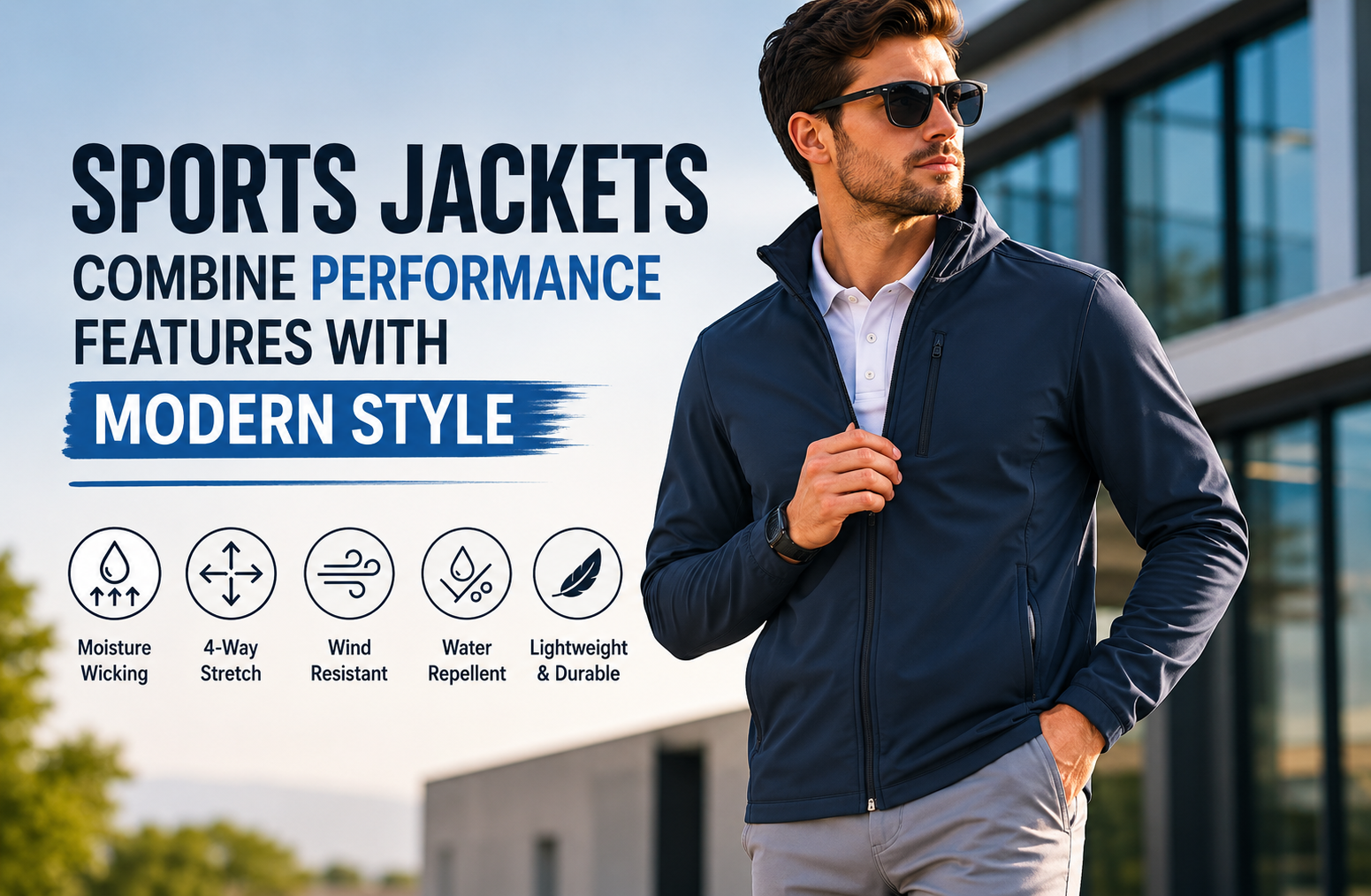
Performance jackets are built around function first. The most important feature is moisture management. A good sports jacket wicks sweat from the skin surface and dries fast, usually within 20 to 30 minutes depending on the fabric blend.
Stretch is the second big factor. Four-way stretch fabric lets you swing a golf club, reach overhead on a hiking trail, or get in and out of a car without the jacket bunching up. Traditional outerwear does not offer this.
Wind resistance matters too. Many modern sports jackets use a tightly woven shell fabric that blocks wind without adding bulk. Some include DWR (Durable Water Repellent) coating that handles light rain without a full waterproof membrane.
Travis Mathew, for example, builds their outerwear specifically for golf and lifestyle use, with stretch paneling at the back and shoulders to allow full arm rotation while keeping a clean, tailored look from the front.
How Do Sports Jackets Fit Into Everyday Style?
The best sports jackets do not look like sports jackets. That is the point. They are cut slim. They have minimal branding. The collar sits properly. The pockets are flat and do not bulk out.
A solid-color sports jacket in navy, black, or charcoal works as an outer layer over a polo, a button-down, or even a light sweater. It does not scream “I just left the gym.” It reads like a sharp outer layer that happens to move well.
This crossover is why sports-lifestyle brands have grown faster than pure sportswear brands in the past five years. Men want the function without sacrificing the look.
What Materials Make the Best Sports Jackets?
Polyester-spandex blends dominate performance outerwear. A typical ratio is 88% polyester, 12% spandex. This gives the jacket stretch, shape retention, and moisture-wicking ability in one fabric.
Nylon-spandex is another common combo. Nylon is naturally more durable than polyester and resists abrasion better. It is often used in jackets designed for outdoor activities like hiking or trail running.
Softshell fabrics combine a woven or knit outer layer with a bonded inner fleece. They are warm, windproof, and flexible. Softshell is ideal for cool-weather golf rounds or autumn commutes.
Avoid jackets with pure cotton outer shells. Cotton absorbs moisture instead of repelling it. It gets heavy and cold when wet. That defeats the purpose of a performance jacket entirely.
Can You Wear a Sports Jacket to Work?
In most modern workplaces, yes. Business casual culture has made performance outerwear acceptable in office settings. A clean, well-fitted sports jacket over a collared shirt works in most tech, media, and casual corporate environments.
The key is to pick a jacket that does not have large logos, excessive zipper pulls, or reflective tape. Subtle design details keep it office-appropriate. Bold athletic branding does the opposite.
A 2022 McKinsey survey found that 58% of employees prefer workplaces with flexible dress codes. Performance outerwear fits naturally into that flexibility.
What Should You Look for When Buying a Sports Jacket?
Start with fit. The jacket should not pull at the shoulders. The sleeves should fall to the base of your wrist. The hem should hit the mid-hip or just below, depending on your preference.
Check the stretch in all directions. Hold the jacket by the sleeve and pull gently in four directions. Good stretch fabric recovers immediately without deforming.
Look at the seam placement. Flatlock seams reduce chafing and lay flat under other layers. Raised seams at the shoulder or underarm will bother you during long rounds of golf or extended activity.
Also check the pockets. Hand warmer pockets should have a zip or secure closure. Chest pockets should sit flat when empty. Internal pockets for your phone or valuables are a big bonus.
How Do You Care for a Performance Sports Jacket?
Machine wash on a cold, gentle cycle. Hot water degrades stretch fibers and can delaminate DWR coatings. Always check the care label, but cold wash is the safe standard for most performance jackets.
Do not use fabric softener. It clogs the moisture-wicking fibers and reduces breathability over time. This is one of the most common mistakes people make with performance outerwear.
Tumble dry on low or hang dry. High heat damages the stretch fabric. After several washes, you can refresh the DWR coating by tumble drying on low for 20 minutes. Heat reactivates the water-repellent treatment.
Store the jacket hanging, not folded. Folding creates permanent creases in the fabric and can weaken bonded layers in softshell constructions.