The Quiet Revolution In Fashion Photography: How AI Is Making Product Imagery More Sustainable
The way people view fashion photography influences how they interact with clothing online. The right images of a product can help customers make informed buying choices. The majority of customers see only the photos that are created. They don’t see the actual resources necessary to produce the images. Behind every catalogue that is polished lies an extensive production cycle. The process often involves physical samples, shipping, studio time, and an extensive creative team. In the wake of sustainability becoming a more prominent issue, companies are re-evaluating all aspects of their work. The photography of products has become a major element of the discussion.
Artificial Intelligence is helping companies to simplify the process. The emphasis isn’t on eliminating creativity, but rather on cutting down inefficiency and wasteful production.
The Hidden Cost Behind Traditional Fashion Shoots
A fashion photoshoot starts well before the camera is ready. Garments must first be produced as physical samples. Those samples are usually shipped from factories to studios. Modern AI is able to create realistic on-model pictures.
At times, they will travel to multiple locations prior to the shoot starting. Shipping needs transportation and packaging. Each step costs money and also increases the carbon footprint. Studios will also require lighting as well as electricity. Models, professional photographers, stylists, and makeup artists collaborate on the set. Numerous brands repeat this procedure each season. New collections often require completely new photography.
Even small updates can create extra work. A new color or design variation may need another round of images. These repeated shoots consume time and resources. They also create costs that shoppers rarely notice.
AI Is Reducing Unnecessary Production
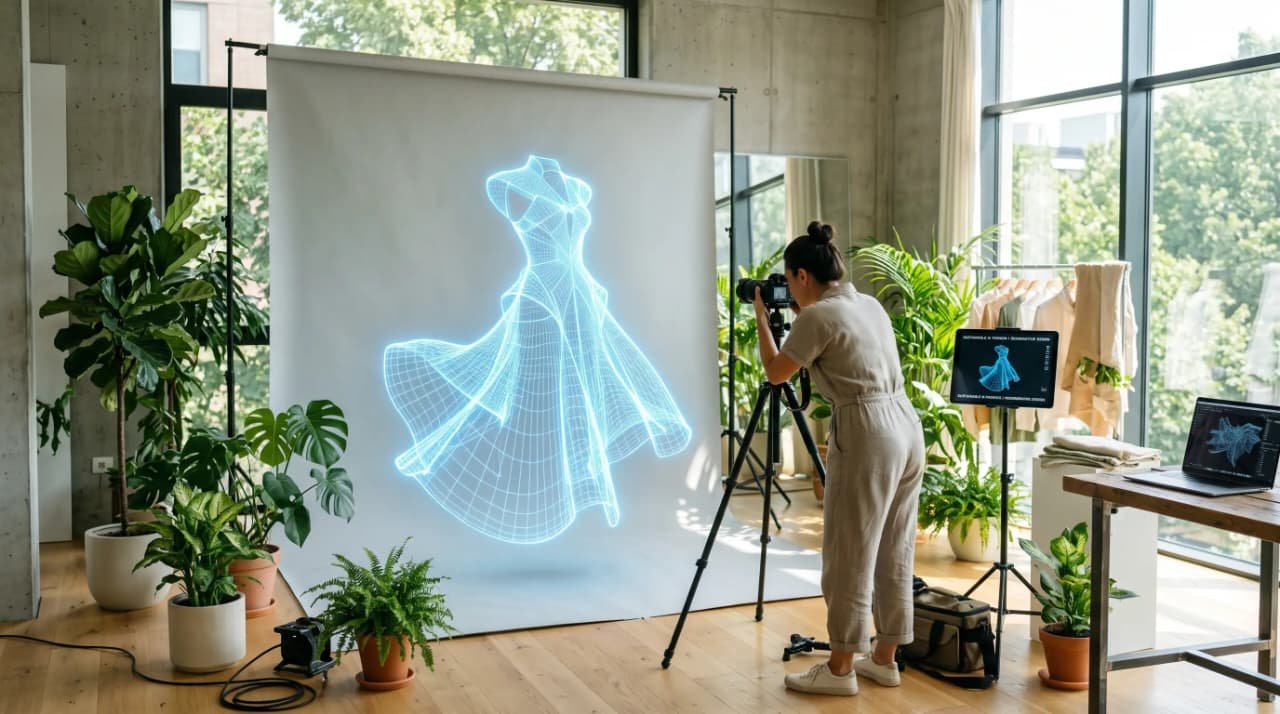
Artificial intelligence offers a more efficient approach to product imagery. Brands may create a more appealing visual using existing photos of their products. It can also create clean pack shots and fresh styling options. This reduces the need for repeated studio sessions. It also limits the number of physical samples needed for photography.
Brands can now turn a single product photo into on-model imagery instead of organizing another complete shoot. That makes catalogue updates much simpler. Products can be presented in different formats without starting from scratch. Fewer studio days also mean fewer shipments. This helps reduce transport and packaging throughout the production process.
Instead of repeating the same workflow, brands can make better use of existing assets. That supports a more thoughtful way of working.
Why Independent Brands Benefit Most
Small fashion labels usually work with limited budgets. Every business expense matters during a product launch. Professional photography can quickly become expensive. Studio hire and creative teams require significant investment. Many independent brands also produce clothing in small batches. They choose quality over large-scale production.
AI gives these businesses greater flexibility. Professional product imagery becomes easier to create without multiple photo sessions. Lower launch costs allow brands to stay focused on craftsmanship. They do not have to sacrifice presentation because of budget limits.
This approach also supports slow fashion. Smaller collections can still look polished and consistent online. Independent designers can compete more confidently. They can launch products without increasing unnecessary production.
More Variety Without More Waste
Customers like seeing products from different angles. They also appreciate images that show clothing on different models. Traditionally, this required additional photography. More models and styling meant more time and higher costs.
AI helps brands create greater visual variety. Much of that work can now happen without another studio booking. This improves flexibility for online stores. Product pages stay fresh while using fewer physical resources. Brands can also keep a consistent visual style. That creates a better shopping experience across different platforms.
Human Creativity Still Leads
Artificial intelligence supports production tasks. Creative direction still depends on people.
The most powerful results result from mixing the two. Fashion stylists determine how clothes will be displayed. Photographers set the mood with the use of lighting as well as composition. Creative directors determine the general identity of an entire collection.
These decisions require experience and artistic judgment. AI simply removes repetitive production work. This gives teams with creative ideas more time to work on storytelling and ideas. Human creativity remains at the center of fashion imagery.
A More Thoughtful Future
Sustainability is about improving every stage of production. Product photography deserves the same attention. Reducing repeat shoots helps lower resource use. Fewer samples and shipments also reduce unnecessary waste. Independent brands benefit from a more affordable process. They can create professional imagery while staying true to responsible production.
AI is not changing the purpose of fashion photography. It helps brands design stunning visuals in an effective way. With fashion continuing to develop and evolve, more effective production techniques are expected to become more valuable. They enable creativity and sustainability together.